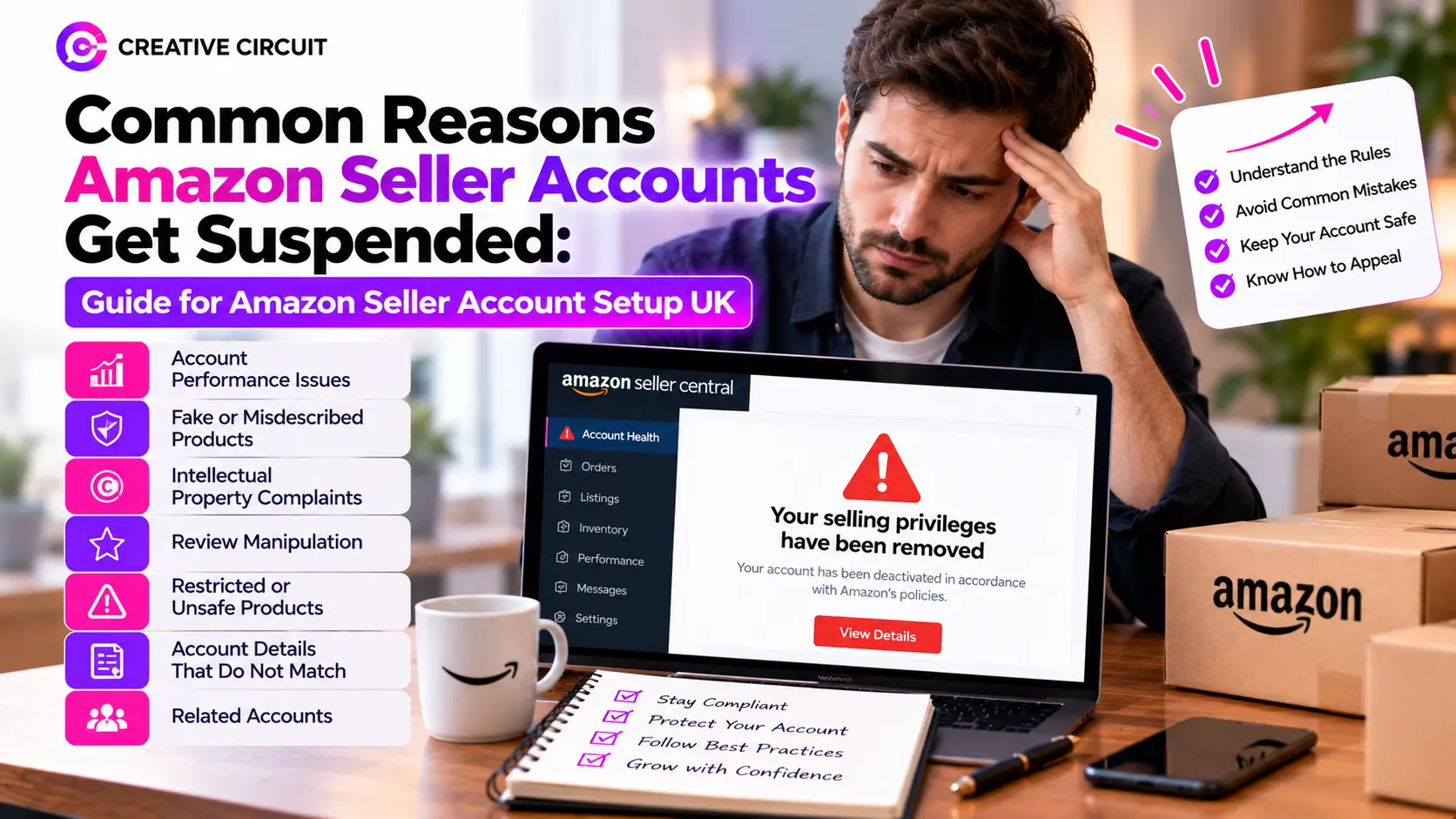

Imagine waking up on a Monday, opening your email, and finding a message that says your selling privileges have been removed. Your listings are gone, your money is on hold, and your stock is stuck in a warehouse. This happens to thousands of sellers every year, and many of them had no idea they were doing anything wrong.
The good news is that most suspensions can be avoided. Amazon is strict, but it is also predictable. If you understand the rules from the start, you can protect your business. This guide covers the most common reasons accounts get suspended, how to stay safe, and how to write a plan of action if the worst does happen. Whether you have just finished Amazon seller account setup UK or have been selling for years, these basics are worth knowing.
Why Amazon Suspends Accounts In The First Place
Amazon’s main goal is to keep shoppers happy and safe. When a customer buys something, they expect it to be real, to arrive on time and to match the description. If your account puts that at risk, Amazon will step in, often quickly and sometimes without much warning.
Most suspensions fall into two groups. The first is performance problems, such as late deliveries or too many complaints. The second is policy problems, such as selling fake goods or breaking review rules. Knowing which group you are in helps you decide what to fix.
Reason One: Poor Account Health Numbers
Amazon tracks how well you serve customers and shows the results in the Account Health page in Seller Central. Three numbers matter the most:
- Order Defect Rate: the share of orders with negative feedback, A-to-z Guarantee claims or chargebacks. Amazon expects this to stay under 1%.
- Late Shipment Rate: the share of orders you ship after the promised date. This should stay under 4% for sellers who ship their own orders.
- Pre-Fulfilment Cancel Rate: orders you cancel before shipping. Amazon wants this under 2.5%.
Amazon can change these targets, so check the current figures on your dashboard. The best habit is to look at this page every week, not once a month. If a number starts to slip, fix the cause early.
Reason Two: Selling Fake Or Misdescribed Products
Amazon takes “inauthentic” items very seriously. If a customer says your product is a fake, or you cannot show where you bought it, your listing or account can be removed.
To stay safe:
- Keep invoices from your suppliers. They should show your business name, the supplier’s details, the product and the quantity.
- Only sell brands you have the right to sell.
- Make sure your listing matches what you really send. If the photo shows a set of three, do not ship a set of two.
Also be careful with conditions. Selling used items as new is one of the quickest ways to lose an account.
Reason Three: Intellectual Property Complaints
Brand owners can report sellers who use their logos, images, designs or names without permission. A few of these complaints can lead to a suspension.
This often catches new sellers by surprise. You might copy a competitor’s photo, use a well-known brand name in your title to attract clicks, or sell a product that looks too close to a patented design. Always create your own photos and text, and check that your product does not copy someone else’s work. If you receive a complaint and believe it is wrong, you can contact the brand owner and ask them to withdraw it.
Reason Four: Review Manipulation
Reviews are one of the most protected parts of Amazon. Breaking the rules here is risky, and Amazon does not forgive it easily. Things that cause trouble include:
- Paying people for reviews.
- Giving free products in return for good ratings.
- Asking friends or family to post reviews.
- Using groups or services that trade reviews.
- Leaving bad reviews on a competitor’s products.
If you want more reviews, use Amazon’s approved tools, such as the Request a Review button. Ask for honest feedback only, never for five stars.
Reason Five: Selling Restricted Or Unsafe Products
Some categories need approval before you can sell, such as certain beauty items, food, toys and electricals. Others are banned. Even approved products must follow UK safety rules, like labelling and testing.
Before you order stock, check Amazon’s restricted products pages and the UK safety rules for your item. Selling something that causes injury or fails a safety check can lead to an immediate suspension and a legal headache too.
Reason Six: Account Details That Do Not Match
This one is more common than people realise. During Amazon Seller Central setup, Amazon checks your identity, address, bank account and card. If anything looks off, or if your details change later and no longer match, they may ask you to verify again. If you miss the deadline, your account can be blocked.
To avoid this, keep your business name, address and payment details consistent. Keep your documents up to date. Answer verification emails quickly. Many sellers who use Amazon seller account services find this part easier because someone checks every detail before they submit it.
Reason Seven: Related Accounts
Amazon usually allows only one seller account per person or business. If you have a second account linked to a closed one, for example through the same bank account, address or device, Amazon may treat it as a related account and suspend it. If you really need a second account, ask Seller Support first and get their approval in writing.
Simple Habits That Keep Your Account Safe
Prevention does not need to be complicated. A short weekly routine goes a long way:
- Check your Account Health page and messages.
- Reply to customers within 24 hours.
- Ship on time and upload valid tracking.
- Keep supplier invoices in one folder.
- Read policy updates in Seller Central.
- Review your listings for claims that you cannot prove, such as “cures” or “best in the world”.
What To Do If You Get Suspended
First, stay calm. Do not open a new account to get around the suspension, because that will almost certainly make things worse. Read Amazon’s message carefully. It usually names the policy you broke or the metric that failed. Then prepare a plan of action, often called a POA.
How To Write A Plan Of Action
A plan of action is a short, clear document that tells Amazon three things. It should be polite, honest and focused on solutions. Here is a simple structure:
- Root cause: Explain what went wrong. Be specific and take responsibility. For example, “We used a new supplier and did not check their paperwork,” is better than “This was a mistake by Amazon.”
- Corrective actions: Describe what you have already done to fix the problem. This might mean removing the listings, refunding customers, or contacting the supplier.
- Preventive measures: Explain what you will do so it does not happen again. For example, a weekly checklist, staff training, or a new approval process for suppliers.
A few tips make it stronger:
- Keep it short, ideally a page. The people reading it handle many cases.
- Use plain language and avoid anger or long stories.
- Attach evidence, such as invoices, test reports or screenshots.
- Do not blame Amazon, customers or competitors.
- Make sure every point links back to the issue in the suspension notice.
If your first plan is rejected, read the reply carefully. It often shows what was missing. Improve your plan and send it again rather than repeating the same text. If the case is complex, an expert can help you review it before you submit.
Final Thoughts
Account suspensions feel scary, but most come from a handful of causes: weak performance numbers, fake or misdescribed goods, copied content, review tricks, restricted items and mismatched details. Stay on top of your dashboard, keep clean records and follow the rules even when it feels slower.
A solid start also helps. If you are still preparing, take your time with Amazon seller account setup UK so that your details, documents and categories are right from the beginning. And if you want support, a trusted Amazon account setup service UK team, like Creative Circuit can guide you through setup and help you stay compliant as you grow. Protect your account early, and you will spend your time selling instead of appealing.