PRODUCT STORYTELLING THAT HELPS SHOPPERS CHOOSE

Amazon A+ Content Agency UK: Product Stories That Answer Real Buying Questions

Your product photographs may look excellent, but buyers often need more context before deciding. How does the product work? Which option is right for them? What makes your brand’s approach different? Amazon A+ Content design gives eligible brands a richer area of the product detail page to answer these questions through images, text, charts and storytelling.

The Creative Circuit helps brands structure Amazon A+ Content in the UK around clarity, visual consistency and verified product benefits. We create content plans and designs intended to support informed buying decisions, not simply fill every available module with decoration.

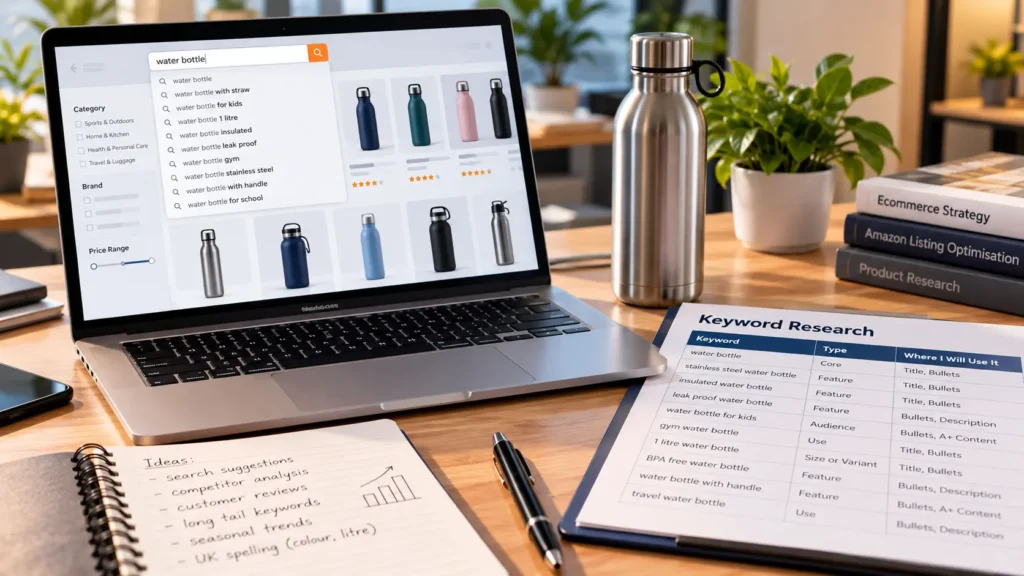
Laptop with product search results next to a notebook of notes on a desk
Illustrative modules
Brand story
Comparison module
DimensionsMaterialsUsage steps

00The short answer

Direct Answer: Is Amazon A+ Content Worth It for UK Sellers?

A+ Content can be useful when eligible shoppers need more information than the standard listing provides. It is particularly valuable for explaining product differences, dimensions, use cases and brand context. Its effectiveness depends on the quality of the product, the information presented and the traffic reaching the page; it does not guarantee a particular conversion increase.

Useful when

Eligible shoppers need more information than the standard listing provides.

Most valuable for

Product differences, dimensions, use cases and brand context.

Depends on

Product quality, the information presented and the traffic reaching the page.

01Definition

What Is Amazon A+ Content?

Amazon A+ Content is enhanced product detail-page content available to eligible brands and other authorised account types on Amazon. Depending on eligibility and current features, it can use rich images, brand story modules, product comparisons and structured text to explain a product in more depth than the standard description area.

A+ Content is not a replacement for accurate titles, bullet points, specifications or main listing images. Those elements provide essential product information and play a central role in discoverability. A+ Content is a supporting decision-making layer for customers who want to compare features or understand usage.

Eligibility and exact modules are controlled by Amazon. UK brand owners should check Amazon Brand Registry and the current A+ manager in Seller Central before commissioning creative that requires a particular format.

Why shoppers hesitate
Material differencesDimensionsInstallationCompatibilityIncluded accessoriesCare instructions

02Purchase questions

Start With Purchase Questions, Not a Module Template

Before designing a single banner, identify why people hesitate to buy. Does the customer need to understand material differences, dimensions, installation, compatibility, included accessories or care instructions? A useful content plan answers these questions in a logical order.

For a home storage product, a sensible story may move from the lifestyle problem to actual dimensions, organisation options, material details and a comparison of sizes. For a technical accessory, compatibility and installation clarity may matter more than a large emotional headline.

The right structure depends on the product. A+ content design agency UK work should begin with factual product research, not recycled slogans or unrelated lifestyle stock imagery.

03Visual narrative

A+ Module Planning: A Clear Visual Narrative

Story arc
BeginningCore purposeMiddleMost important featuresEvidenceExplanatory visualsEndPurchasing guidance or comparison

Conceptual arc drawn from the copy.

A strong A+ layout typically has a beginning, middle and end. Start with the product’s core purpose, develop its most important features, provide evidence or explanatory visuals where appropriate, and finish with additional purchasing guidance or a helpful comparison. Every panel should earn its space.

We consider image hierarchy, crop behaviour, mobile readability and colour consistency. Tiny text embedded into images may look beautiful in a design tool but become unreadable on a phone. Information that matters for comprehension should be available in clear text where the platform allows.

Our approach keeps a module inventory and checks each one against a customer question. It is a practical alternative to selecting the maximum number of graphics just because a slot is available.

04Comparison charts

Product Comparison Charts That Make Choice Easier

Comparison tables can help a customer choose between products in the same range, particularly where sizes, materials, capacities or feature sets vary. The chart must represent real differences and avoid implying features that a variant does not have.

A useful comparison answers ‘Which model is right for my use?’ rather than simply declaring one item to be better than everything else. A carefully organised chart can also introduce related products in a coherent way, subject to module eligibility and Amazon rules.

Example structure: customer need → recommended model → verified distinguishing feature → specific limitation or important note. The final copy and visuals should be approved against source specifications.

Customer needRecommended modelDistinguishing feature and limitation
Need AModelVerified feature + limitation
Need BModelVerified feature + limitation
Need CModelVerified feature + limitation

Example structure layout. Final copy approved against source specifications.

05Brand story

Brand Story Modules and Visual Identity

A brand story is valuable when it communicates something authentic: why the company exists, what it designs for, the thinking behind its materials or how its product family fits together. Customers are unlikely to remember a generic claim that a brand is ‘passionate about quality’.

We take the existing logo, approved palette, typography rules and product imagery to form a consistent visual language. The same brand promise should appear in listings, packaging, Storefront navigation and A+ modules without becoming repetitive.

If founding dates, certifications, sustainability credentials or manufacturing claims cannot be verified, they should not appear in the content. Good storytelling is specific and supportable.

06Content options

Basic A+ Content, Brand Story and Premium A+

Basic A+

Often supports combinations of text, images and comparisons.

Brand Story

Focuses on the brand identity and portfolio.

Premium A+

May offer additional rich or interactive modules for accounts that meet current requirements.

Eligibility and modules vary by account. Confirm in Seller Central before approving production.

Amazon provides different enhanced content options with varying eligibility and module capabilities. Basic A+ often supports combinations of text, images and comparisons. Brand Story focuses on the brand’s identity and portfolio. Premium A+ may offer additional rich or interactive modules for accounts that meet Amazon’s current requirements.

The correct design specification depends on what the particular seller account can access today. We do not promise Premium A+ access simply because the brand has a trademark, and we do not assume an exact module limit without checking current Seller Central tools.

Before approving production, confirm the available content type, participating marketplaces, image specifications and moderation standards for every module in the scope.

07Copy

A+ Copywriting: Explain Benefits Without Unsupported Claims

Verified fact

Stainless-steel housing

Supported by product specification.
Needs a defensible basis

Built to last forever

Too strong without evidence.

Good copy pairs a genuine feature with a customer benefit. ‘Stainless-steel housing’ may be a verified fact; ‘built to last forever’ is a much stronger claim that should not be made without a defensible basis. Likewise, environmental, medical, safety and performance statements may need evidence and may be restricted.

A+ writing should be concise, specific and free of exaggerated superlatives. Avoid direct competitor attacks, prohibited promotional language, pricing or shipping claims where Amazon’s content policies disallow them, and fake endorsements.

British English terminology matters, especially for dimensions, spelling and consumer expectations. We write for people who are comparing products, rather than treating the module as a place to repeat keywords mechanically.

Pack shots
Detail views
Contextual images
Materials
Dimensions
Usage steps
Available brand assets

Photography inventory categories. Not real assets.

08Asset inventory

Imagery, Photography and Asset Preparation

The strongest A+ projects often start with a product photography inventory: pack shots, detail views, contextual images, materials, dimensions, usage steps and available brand assets. We assess what exists, what can be reused and where a targeted new shot would help.

We prepare imagery according to the current module specifications in the client’s account. Final exports should be checked for legibility on small screens and tested against permitted dimensions and crop. Text-heavy raster graphics can become difficult to read; where possible, use clean imagery and accessible supporting copy.

An agency should never fabricate a certification seal, misleading before-and-after result or unsupported award to make a graphic appear more credible.

09Design workflow

Amazon A+ Design Workflow: From Discovery to Moderation

FRAME 01

Discovery

Identify target ASINs, registered brand, eligible content types and the products’ key buyer questions.

FRAME 02

Content map

Establish a message sequence and choose suitable modules.

FRAME 03

Design direction

Develop typography, image crops, brand accents and layout.

FRAME 04

Copy and visual production

Create draft assets from approved source information.

FRAME 05

Client fact check

Confirm every specification, comparison, brand claim and image.

FRAME 06

Submission

Upload and assign content where account permission and scope allow.

FRAME 07

Review

Track moderation, correct any rejected elements and verify the live presentation after approval.

Approval decisions and processing times are controlled by Amazon. We should never present an upload as published until it is visibly live.

10Performance

How to Evaluate A+ Content Performance

A+ Content can improve the information a customer sees, but any sales or conversion effect is influenced by traffic quality, price, availability, reviews and competing offers. Sellers should compare available performance signals before and after launch while recognising these external influences.

Look beyond a single uplift percentage. Customer questions and returns feedback may indicate whether buyers understand product size or compatibility more clearly. If several ASINs are being redesigned, a phased rollout can create a more practical learning process.

We do not promise a universal conversion-rate increase. Amazon has published general figures about enhanced content, but those are not guarantees for a particular brand, listing or campaign.

11Categories

A+ Content for Different Product Categories

Technical

Dimension drawings, parts explanations and compatibility diagrams.

Beauty and lifestyle

Usage instructions, accurate ingredient or material information and substantiated claims.

Home and kitchen

Context photographs that show scale and day-to-day use.

Technical products may need dimension drawings, parts explanations and compatibility diagrams. Beauty or lifestyle products often need clear usage instructions, accurate ingredient or material information and carefully substantiated claims. Home and kitchen brands can benefit from context photographs that show scale and day-to-day use.

For products with safety requirements, A+ graphics cannot replace mandatory labels or instructions. Category rules and product-specific limitations still apply. A premium-looking visual is only valuable if it helps customers make an accurate decision.

We adapt the module plan to the decision complexity of the product rather than putting the same layout on every ASIN.

13Cost

How Much Does Amazon A+ Content Design Cost?

The design fee depends on the number of ASINs, whether products can share templates, the number of distinct modules, availability of approved photography, copywriting complexity and whether Seller Central upload support is needed. A new multi-product system with category comparisons costs more to prepare than adapting a few verified existing assets.

Request a proposal specifying content strategy, module count, revisions, formats, licensing for images and delivery of editable source files where applicable. Confirm that any optional photography or video work is itemised.

Next step

Share your brand, target ASINs and current A+ eligibility.

14Storyboard

Build a Storyboard Before Designing the Final Graphics

Module 01

Customer question

Module 01

Verified answer

Module 01

Planned visual

Module 01

Supporting copy

Module 01

Approval owner

Storyboard fields for each module. Template, not client content.

A storyboard translates buying questions into a sequence of modules. For each module, write down the customer question, verified answer, planned visual, supporting copy and approval owner. One product might need a dimension graphic, a material close-up, instructions and a product-family comparison. Another may need only a few clear explanatory panels.

A storyboard makes review faster because stakeholders can assess the message before a designer spends time on finished imagery. It also exposes missing evidence. If a planned slide says a product is hypoallergenic or clinically proven, the team can ask for substantiation before creating a prominent graphic.

For multi-ASIN projects, a shared A+ content design system can define typography, spacing, logo handling, brand colours and image treatment while leaving the messaging product-specific. That combination keeps the catalogue consistent without turning every product page into a copy-and-paste template.

Dense graphic on desktop

Key factsSizeCompatibilityWhat is included

Native text and clear contrast

15Mobile

Mobile Readability and Accessibility in A+ Creative

Many A+ layouts fail not because the imagery is poor but because the important text has been compressed into a complicated picture. A large comparison graphic may look impressive in a design presentation while product differences become impossible to read on a mobile screen.

Plan for crop variations, use high-contrast text against photographs, simplify overly dense diagrams and place essential facts in appropriate native text fields where supported by the module. Do not make shoppers decipher tiny icons or rely only on colour to distinguish options.

Before sending files for review, test them at realistic mobile sizes, not only at 100% zoom in a design editor. Amazon enhanced brand content should make information clearer and more inclusive; visual sophistication is valuable only when it supports comprehension.

16Governance

Content Governance for Growing Amazon Catalogues

Once an A+ design is approved, preserve an inventory of which assets and claims are used on which ASINs. This matters when a product changes material, dimensions, packaging or included accessories. A beautiful but outdated infographic can become misleading without anyone noticing.

Define an approval process for product facts, legal or regulated claims, creative assets and upload permissions. Keep editable source files where licensing and scope allow, and give versions meaningful names so the next design update does not start from scratch.

For a larger brand, agree when A+ content should be reviewed: major product updates, new variations, significant customer feedback or policy changes. A practical maintenance plan helps protect the value of the initial Amazon A+ content services investment.

ASINAssets and claims usedReview trigger
ASIN 1Add assets and claimsProduct update
ASIN 2Add assets and claimsNew variation
ASIN 3Add assets and claimsCustomer feedback or policy change

Illustrative governance inventory. Triggers named in the copy.

17FAQs

Frequently Asked Questions About Amazon A+ Content

It is enhanced product content for eligible Amazon listings, allowing richer imagery, product explanations and comparison-style modules.

Eligibility commonly involves Amazon Brand Registry or other authorised selling arrangements. Check your actual Seller Central A+ manager for current options.

Enhanced Brand Content is an older term that is often used to describe the enhanced branded product content now commonly called A+ Content.

Brand Registry generally requires relevant trademark eligibility, but specific A+ access depends on Amazon’s current account rules and authorisation.

Amazon provides Basic A+ capabilities to eligible accounts without a separate design-tool fee, although creative agencies may charge for planning and production.

It is an enhanced set of content features for qualifying accounts. Available modules and eligibility are controlled by Amazon.

It can support clearer buying decisions, but performance depends on product, price, reviews, traffic and other factors. Results are not guaranteed.

No. Bullet points and core product fields remain important; A+ Content adds supplementary information and visual explanations.

Yes, provided the assets are suitable, licensed for the use and meet Amazon’s current specification and policy requirements.

The answer depends on the questions a shopper must resolve and the module types available in your account. More modules are not always better.

Yes. Charts should compare verified details of relevant products and avoid misleading claims about competitors or variations.

Amazon may moderate submitted content and reject material that does not meet its requirements. Publishing is not guaranteed on submission.

A shared visual system helps branding, but product explanations and module hierarchy should reflect the needs of each product family.

Timing depends on the number of ASINs, availability of product facts, photography, approvals and Amazon’s moderation process.

Fees depend on research, copywriting, modules, imagery, revisions and implementation. Request a quote for the specific ASINs and deliverables.

Start the conversation

Talk to The Creative Circuit About Amazon A+ Content

You do not need to have every answer before getting in touch. Tell us your marketplace, product type, current challenges and what you want the next step to achieve. We can discuss a practical scope, the information needed and which decisions still depend on Amazon, suppliers or your own advisers. Get in touch to discuss the project.