GIVE YOUR BRAND ROOM TO BE UNDERSTOOD

Amazon Storefront Design UK: A Branded Shopping Space Built Around Your Products

A customer may discover one of your products and want to know what else your brand makes. A well-organised Amazon Brand Store gives eligible brands a dedicated destination to introduce their story, group products and help shoppers move through a range without getting lost.

The Creative Circuit provides Amazon storefront design services in the UK, bringing together real product imagery, clear navigation, useful category pages and consistent brand messaging. The goal is not to produce an elaborate digital brochure. It is to help shoppers understand the product range and find the items that fit their needs.

Brand Store – conceptual
HomeKitchensBedroomsWorkspaces
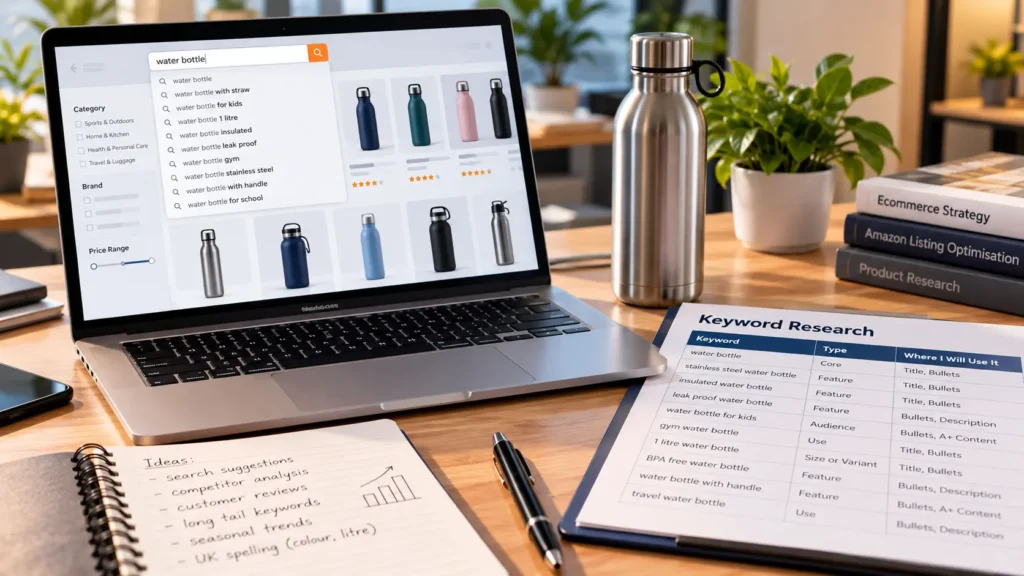
Laptop showing product search results on a desk beside notes
Brand promiseHero banner with a verified message
KitchensBedroomsWorkspaces

Illustrative Store layout. Not a client Store.

00The short answer

Direct Answer: How Do I Create an Amazon Storefront in the UK?

Eligible sellers typically need access to the Brand Store tools through Amazon Brand Registry or another authorised relationship. Then organise the product catalogue, create a clear page structure, prepare compliant imagery and copy, build the pages in Amazon’s Store builder and submit them for review. A brand Store is hosted within Amazon and is different from an independent e-commerce website.

01

Access through Brand Registry or another authorised relationship

02

Organise the product catalogue

03

Create a clear page structure

04

Prepare compliant imagery and copy

05

Build in the Store builder

06

Submit for Amazon review

01Brand Store

What Is an Amazon Brand Store?

Where each one lives

Amazon Brand Store

  • Hosted within Amazon
  • Built with Amazon Store tools for eligible brands
  • Creation is free for eligible brands

Shopify or WordPress site

  • Independent website
  • Controlled through a separate platform
  • Not part of the Amazon marketplace

Agency fees cover strategy, design, content and implementation, not an Amazon charge.

An Amazon Brand Store is a multipage shopping destination hosted within Amazon for eligible brands and authorised participants. It can present products, category collections, brand information, images and video in a structured environment using Amazon’s Store-building tools. It is different from an independent Shopify or WordPress store because it lives inside Amazon’s marketplace.

Amazon says Brand Store creation is free for eligible brands; a creative agency’s fee, if engaged, covers strategy, design, content and implementation services rather than a separate charge imposed by Amazon for the Store itself.

A Store should be simple to navigate on mobile as well as desktop. Its success depends on product availability, the coherence of the range and the relevance of traffic arriving there.

How do customers choose?
Use caseProduct typeSizeCollectionCustomer need
KitchenwareBy cooking task
BeautyBy routine stage
Home organisationBy room

02Strategy

Storefront Strategy: Start With How People Shop the Range

Before discussing colour palettes or banner styles, examine the product catalogue and typical shopping journeys. Are customers choosing by use case, product type, size, collection or customer need? The answer determines the most intuitive menu and page structure.

A kitchenware brand might group items by cooking task. A beauty brand may organise around routine stages, supported by accurate product information. A home organisation brand may separate storage by room. The aim is to help shoppers recognise the path they want without learning internal company terminology.

Amazon storefront design UK should also consider future product launches. A navigation system that only works for today’s three ASINs may become awkward when the range expands.

03Homepage

Homepage Design: Tell Shoppers What the Brand Offers

The Brand Store homepage should establish brand identity quickly, then make useful shopping routes obvious. A hero can communicate the central product category or a verified brand promise, while product collections guide visitors into more specific pages.

We avoid huge decorative banners that push every product below the fold on mobile. Instead, content hierarchy should prioritise clear categories, products and relevant brand value. Any slogan needs to be backed by the actual offer.

The visual language should coordinate with packaging and product detail pages. Repeated logos and competing colour schemes can make a Store feel less polished than a simpler, consistent arrangement.

Section previews

Desktop homepage

Mobile stack

Collection page hierarchy
1. Collection hero
2. Category copy that introduces the group
3. Product
3. Product
3. Product
3. Product

04Collections

Category and Collection Pages

For a broader range, collection pages can reduce decision effort. They can introduce a group of products, distinguish variations and organise relevant buying options. The right page length depends on catalogue depth and the question shoppers are trying to answer.

We consider the relationship between featured products, category copy, hero imagery and navigation. If a popular line has multiple sizes, make differences explicit. If a category is seasonal, ensure the Store does not continually promote out-of-stock ranges.

A product tile should lead to the actual relevant offer. Avoid promotional promises that the destination listing cannot support.

05Mobile first

Mobile-First Storefront Design

Banner safe area
Keep the message inside the dashed area

Many shoppers move through Amazon on phones, where navigation, cropped imagery and visual density become especially important. Wide desktop banners can crop awkwardly, and large text baked into graphics may shrink beyond readability.

We plan imagery with safe areas and review how category tiles stack or scroll across devices. Content needs a clear tap hierarchy and sufficient contrast. The strongest visual sections often use a small number of focused messages rather than multiple headlines fighting for attention.

Where platform previews are available, check mobile and desktop before submission and again after publication. A design that passes on a desktop monitor is not automatically ready.

06Identity and media

Brand Identity, Photography and Video

Useful Store creative combines clear product images with a consistent brand system. Real packaging, lifestyle context, product close-ups, usage images and short demonstrations may help shoppers understand a range. The exact format must comply with Amazon’s current Store guidelines.

We audit existing assets first to see what is reusable. If photography is missing, the creative brief should specify which images would improve comprehension and where they would be used. Do not use irrelevant stock models or fabricated product shots as substitutes for actual merchandise.

Brand story should be rooted in verifiable details. Avoid unsupported sustainability claims, fake review badges, unlicensed partner logos and exaggerations about product performance.

Real packaging
Lifestyle context
Product close-ups
Usage images
Short demonstrations

Creative formats named in the copy.

07Launches and campaigns

Brand Store Pages for Product Launches and Seasonal Campaigns

A Store can support a new range or timely campaign when product information and stock are ready. Promotional navigation should have a planned end date and someone responsible for updating it. Outdated seasonal banners can make a brand appear neglected and send visitors towards unavailable products.

We can plan modular sections so selected collections can be refreshed without rebuilding the whole Store. That includes naming conventions for assets, product grouping guidance and a simple content governance checklist.

If a campaign involves discounted offers or special claims, the seller must check Amazon’s promotional and content policies before submitting creative.

08Insights

Amazon Store Insights and Practical Improvement

QUESTION 01Which pages draw attention?
QUESTION 02Which collections are rarely visited?
QUESTION 03Where do shoppers enter?
QUESTION 04Do the promoted products remain relevant?

Depending on available features and permissions, Brand Store insights can help sellers understand visits, traffic sources and interactions with content. Reporting definitions may differ from advertising attribution and should not be mixed without explanation.

Useful questions include: which pages draw attention, which collections are rarely visited, where do shoppers enter, and do the promoted products remain relevant? Storefront optimisation may involve changing navigation labels, reordering collections or improving imagery rather than redesigning everything.

A genuine improvement plan should connect observed behaviour to a proposed edit and then review the result over a suitable period, noting other changes such as promotions and inventory.

10Design workflow

Our Amazon Brand Store Design Process

STEP 01

Discovery

Confirm brand access, product catalogue, current Store status and design objectives.

STEP 02

Architecture

Map navigation, key collections and page hierarchy.

STEP 03

Content

Collect approved brand messaging, images, product associations and any category explanations.

STEP 04

Creative design

Create visual layouts using existing brand assets and suitable module formats.

STEP 05

Build

Implement approved content in Amazon’s Store builder where authorised.

STEP 06

Preview and moderation

Check device layouts, links and policies, then submit for Amazon review.

STEP 07

Handover

Record the page structure and maintenance needs.

Amazon controls moderation and availability, so we never promise a publication date without confirmation.

What a project may include

  • Sitemap or navigation outline
  • Page-by-page content plan
  • Hero and collection imagery
  • Brand style guidelines for the Store
  • Product association map
  • Build support
  • Launch QA checklist

Page and asset counts are agreed before work starts.

11Deliverables

What You Receive From a Storefront Design Project

Deliverables may include a sitemap or navigation outline, page-by-page content plan, hero and collection imagery, brand style guidelines for the Store, product association map, build support and launch QA checklist. The specific number of pages and assets should be agreed before work starts.

For brands with an existing Store, a redesign project may begin with an audit of navigation, content relevance and mobile presentation. It may be more efficient to improve selected pages than to replace everything.

Editable source files for graphics and a clear inventory of images can reduce future update costs, especially when the catalogue grows.

12Who benefits

Who Can Benefit From a Branded Amazon Store?

A Store is particularly relevant to eligible brands with multiple complementary products, seasonal collections or a meaningful brand story. A single-product brand may still find value, but the strategy should be proportionate to its catalogue and available traffic.

Brands launching a new collection can use a Store to introduce related items in context. Mature brands may need category navigation that reflects how shoppers actually explore the range rather than internal SKU numbering.

Storefront design should respond to the size and shape of the business. More pages and decorative sections are not automatically an improvement.

13Wider plan

How Amazon Storefront Design Connects With Your Wider Amazon Growth Plan

Amazon Product Listing and A+ Content help shoppers make decisions about individual ASINs. An Amazon Storefront provides a navigation and brand layer across the range. Amazon PPC Ads, particularly eligible brand formats, may bring shoppers into relevant Store pages.

If you are just getting started, ensure Seller Account Setup and Brand Registry eligibility are addressed before commissioning an elaborate Store. If you are building a new product range, Product Hunting can help align the catalogue with actual demand.

14Pricing

Amazon Storefront Design Pricing and Maintenance

Amazon does not charge eligible brands a separate fee merely to create a Brand Store. Agency fees vary with store architecture, number of pages, creative assets, video, copywriting, product mapping, implementation and planned revisions.

Ask whether future collection updates, new launches and seasonal campaigns are included or quoted separately. A Store should be maintainable by the brand after handover rather than dependent on a complete redesign for every catalogue change.

Next step

Share your existing Store URL if you have one, your brand status and approximate number of products.

15Example architecture

Example Store Architecture for a Growing Product Brand

Conceptual Store sitemap
Store homepage
Brand promise and three routes
Kitchens
Compare by size or purpose
Bedrooms
Compare by size or purpose
Workspaces
Compare by size or purpose

Hypothetical home organisation brand. Not a client Store.

Imagine a hypothetical home organisation brand with products for kitchens, bedrooms and workspaces. A sensible Brand Store could open with a simple brand promise and three clear shopping routes, then offer dedicated pages for each room. Within a collection, shoppers could compare products by size or purpose rather than decode internal item numbers.

The design team would map each landing page to real ASINs and check that product names, imagery and availability remain consistent. If the brand sells only three products, the navigation should be simpler; creating empty category pages to look established would be counterproductive.

This example is conceptual and is not presented as a client Store. The principle is that Amazon Brand Store design begins with an information architecture that reflects customer choices, not the number of pages an agency wants to sell.

Before submission

  • Logo and brand name
  • Menu labels
  • Category routes
  • Product associations
  • Links
  • Mobile crop behaviour
  • Claims supported
  • Seasonal dates and availability
  • Permission to use external assets

Pre-submission checklist.

16Quality control

A Storefront Quality-Control Checklist Before Submission

Check the logo and brand name, menu labels, category routes, product associations, links and mobile crop behaviour. Does every collection page have a clear purpose? Do product tiles point to the intended ASINs? Are hero banners readable without covering the product with excessive decorative text?

Confirm that every claim is supported and that campaign visuals follow applicable Amazon policies. Review dates and availability for seasonal campaigns, and avoid references to promotions that may expire before moderation finishes. If assets come from an external photographer or design studio, confirm the brand has permission to use them in Amazon Store creative.

Document the submission date, Amazon moderation response and any revisions. Only mark the Amazon storefront creation service complete after verifying the live Store and agreeing the handover materials.

17After launch

Keeping the Store Useful After Its Initial Launch

A Brand Store should change when the catalogue or customer needs change. Establish a light maintenance routine to review unavailable products, old promotions, navigation clarity and the performance information available in the Store’s reporting tools. A new collection should have a defined place in the structure rather than being added randomly to the homepage.

Seasonal refreshes can use the same brand system with a small number of new images, provided the content remains accurate. For brands running Sponsored Brands campaigns, periodically confirm that paid destinations still match ad messages and that the promoted ranges remain in stock.

Good Amazon Storefront optimisation is therefore partly a content-governance service. The long-term value comes from a clear structure that the business can maintain, not from creating a visually elaborate launch that nobody updates.

18FAQs

Frequently Asked Questions About Amazon Storefronts

It is an Amazon-hosted, multipage shopping destination where eligible brands can present product ranges and brand information.

Amazon says Brand Stores are available to eligible Brand Registry sellers, vendors and authorised agencies representing vendors, subject to current rules.

Amazon offers the Brand Store creation tool free to eligible brands; an external agency may charge for design and implementation.

Brand Registry is the main eligibility route for many seller-owned Brand Stores. Confirm the account’s current capabilities in Amazon.

No. A Brand Store is hosted inside Amazon, while Shopify powers an independent e-commerce website controlled through a separate store platform.

It depends on the size and structure of your catalogue. Pages should support clear shopper journeys rather than hit an arbitrary number.

Supported video formats and placements depend on current Amazon Store features and creative requirements.

A clearer Store can help shoppers explore a brand, but sales outcomes depend on traffic, the offer, listings, price and many other factors.

Eligible Sponsored Brands formats can direct shoppers to relevant Brand Store destinations, subject to Amazon’s current advertising features.

Yes. A redesign can address navigation, collection grouping, imagery, mobile presentation and content accuracy.

Clear, accurate assets are important. Existing brand images may be sufficient, but some projects benefit from targeted new photography.

Amazon applies content and moderation requirements. Submission does not guarantee immediate publication.

The goal is a maintainable structure and clear documentation, subject to the account permissions and tools available to the brand.

Agency fees depend on page count, creative assets, product mapping, copywriting and implementation. Amazon’s own Brand Store builder is free for eligible users.

Use clear navigation, purposeful product collections, legible text, appropriately cropped images and real device previews before launch.

Start the conversation

Talk to The Creative Circuit About Amazon Storefronts

You do not need to have every answer before getting in touch. Tell us your marketplace, product type, current challenges and what you want the next step to achieve. We can discuss a practical scope, the information needed and which decisions still depend on Amazon, suppliers or your own advisers. Get in touch to discuss the project.