
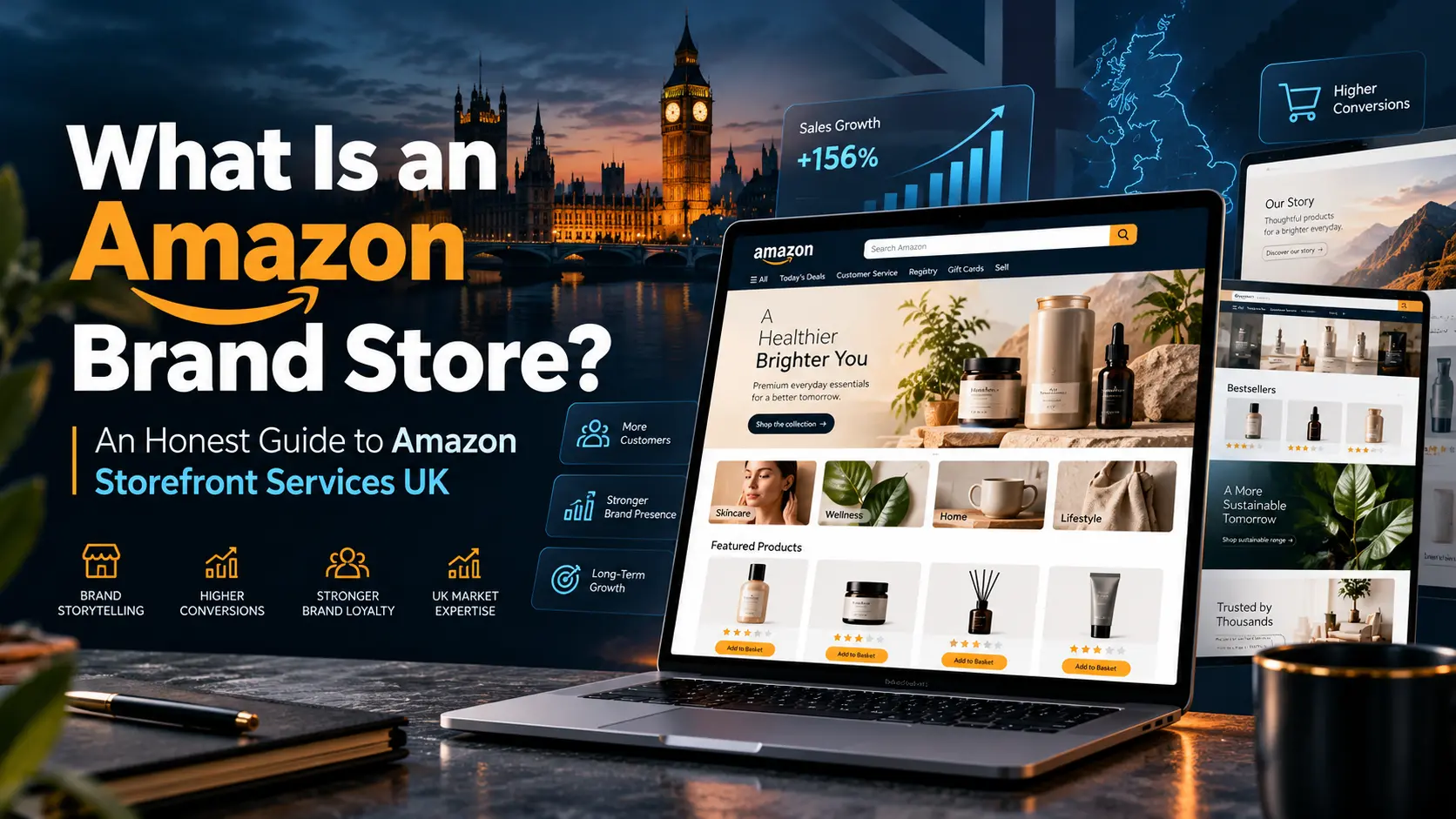

Here is something many Amazon Storefront Services UK do not realise: Amazon lets eligible brands build a free mini website inside its own platform, with its own web address, custom pages and no third-party competitor ads displayed within the Store. Yet some brands still rely entirely on individual product listings.
Is that a mistake? Sometimes yes, and sometimes no.
An Amazon Brand Store can be a valuable growth tool, but it is not necessarily the best first step for every seller. A professionally designed storefront can help customers explore your products, understand your brand and discover more reasons to buy.
However, launching one without a clear strategy will not automatically increase your sales.
This guide explains what an Amazon Brand Store is, how it works, its benefits, costs and limitations, and when it makes sense to invest in Amazon Storefront services UK.
What Is an Amazon Brand Store?
An Amazon Brand Store is a customisable, multi-page shopping destination that allows eligible brands to showcase their products directly on Amazon.
Think of it as a mini website built using Amazon’s tools, where customers can explore your collections, learn about your business and purchase products through Amazon’s existing checkout process.
Unlike an individual product listing, which focuses on one product or its variations, a Brand Store brings your wider product catalogue together in one organised space.
Your storefront receives a dedicated Amazon URL, typically beginning with amazon.co.uk/stores, which you can share through marketing campaigns and other channels.
Customers may discover your store through brand links on product pages, Sponsored Brands advertisements, social media posts or external marketing campaigns.
What Can You Include in an Amazon Store?
Amazon provides customisable layouts and design tools that allow brands to create different types of pages.
A typical Brand Store can feature:
- Homepage: An introduction to your brand, values and most important products.
- Category pages: Dedicated sections for different collections, such as kitchen accessories, beauty products or home essentials.
- Product grids: Organised displays featuring products from your Amazon catalogue.
- Lifestyle images and videos: Visual content showing your products in real situations.
- Bestseller collections: Sections highlighting popular products and customer favourites.
- New arrivals: Dedicated areas for recently launched products.
Amazon’s Store builder uses templates and drag-and-drop functionality, so creating a basic storefront does not require coding experience.
However, planning the layout, preparing high-quality visuals and organising product collections still require time and attention.
Who Can Build an Amazon Brand Store in the UK?
Amazon Brand Stores are available to eligible sellers and vendors who meet Amazon’s requirements, including the applicable Brand Registry eligibility rules.
For many third-party sellers, enrolment in Amazon Brand Registry is the main route to accessing this feature.
Brand Registry generally requires an eligible trademark and evidence that you own or are authorised to represent the brand. Requirements may vary by marketplace and application status.
Once eligible, you can access the Store builder through Amazon’s advertising or seller tools.
Creating and publishing the Store itself does not involve a separate Amazon Store building fee.
You should check the latest eligibility and setup requirements in Amazon Seller Central before beginning.
What Can an Amazon Brand Store Do for Your Business?
An Amazon Storefront offers several practical advantages, especially for businesses selling multiple related products.
1. Showcase Your Complete Product Range
Individual Amazon listings focus on specific products.
A Brand Store allows customers to explore your broader catalogue without repeatedly searching through Amazon results.
For example, a UK skincare company might organise products into collections for cleansers, moisturisers, serums and skincare routines.
Customers who originally visited one product can discover other relevant items within the same brand.
This creates opportunities for additional product discovery and complementary purchases.
2. Create a Branded Shopping Experience
Standard Amazon product pages follow Amazon’s established layout.
A Brand Store provides more flexibility to introduce brand colours, lifestyle photography, messaging and product collections.
It allows you to communicate what makes your business different while maintaining a consistent visual identity.
Working with specialists offering Amazon Storefront services in the UK can help you plan a professional layout that presents your products clearly and reflects your brand.
3. Provide a Dedicated Destination for Amazon Advertising
Sponsored Brands campaigns can direct customers to a Brand Store or eligible Store pages.
This can be particularly useful when advertising an entire product collection rather than a single item.
Instead of sending everyone to one listing, you can introduce shoppers to several related products.
However, performance depends on factors such as targeting, product relevance, pricing and the shopping experience.
A Brand Store does not guarantee higher advertising conversions.
4. Tell Your Brand Story
Customers often want to know more about the businesses behind the products they purchase.
A storefront provides space to communicate your brand’s purpose, product quality, values and key differences.
You can use lifestyle images, short descriptions and visual storytelling to introduce your business in a way that individual product listings may not fully support.
5. Access Store Performance Insights
Amazon provides Store analytics that can help eligible brands understand how their storefront performs.
Depending on available reporting features, these insights may include:
- Store visits
- Page views
- Traffic sources
- Sales attributed to Store visits
- Units ordered
- Customer engagement patterns
These reports can help you identify popular collections, understand traffic sources and make informed decisions about future improvements.
6. Share Your Store Outside Amazon
Your Amazon Store has a shareable URL that can be used in promotional activities.
You may direct relevant customers to your storefront through:
- Social media campaigns
- Email newsletters
- Influencer collaborations
- Business websites
- External advertising campaigns
This creates a central Amazon destination where customers can explore your products before purchasing.
How Much Does Amazon Storefront Design Cost in the UK?
One of the biggest advantages of Amazon Brand Stores is that Amazon does not charge a separate fee to create or host them.
However, building an effective storefront may still involve business expenses.
Do It Yourself
You can use Amazon’s Store builder without paying a design agency.
This approach suits sellers who have a clear brand identity, professional product images and enough time to plan and maintain their store.
Your main investment is the time required to organise products, prepare visuals and learn the platform.
Hire an Amazon Store Design Specialist
Professional Amazon Store design UK services usually involve planning, creative design, product organisation and Store setup.
Depending on the project, a team may help with:
- Store architecture and category planning
- Custom banner design
- Product collection layouts
- Mobile-friendly visual design
- Brand storytelling
- Store submission and updates
Prices vary depending on the number of pages, design complexity, available assets and the services included.
Before hiring a team, request a clear quotation explaining what is included and whether ongoing changes cost extra.
Ongoing Store Maintenance
A storefront should be reviewed as your business changes.
New product launches, seasonal campaigns, discontinued items and branding updates may require adjustments.
A Store is free to publish, but keeping it relevant still requires effort.
Which Sellers Benefit Most From Amazon Storefront Services UK?
Not every Amazon seller has the same business goals.
A Brand Store generally becomes more useful when your business has enough products, customers and marketing activity to justify a dedicated branded destination.
Brands With Multiple Related Products
If you sell several complementary products, a Store can help customers understand your complete range.
For example, a pet accessories brand might organise products into categories for feeding, grooming, travel and toys.
This makes it easier for shoppers to discover products beyond their initial search.
Businesses Running Sponsored Brands Ads
If you already invest in Amazon advertising, a Store can support campaigns promoting product collections and brand awareness.
A well-organised destination gives customers more opportunities to explore relevant products after clicking an advertisement.
Brands With External Traffic
Businesses with established social media audiences, email subscribers or influencer partnerships can use their Store URL to direct interested shoppers to Amazon.
This can be particularly helpful when launching new collections or promoting several related products.
Businesses With Strong Brand Identity
If your design, product story or brand values influence purchasing decisions, a Brand Store provides additional space to communicate those qualities.
Sellers Offering Bundles and Product Collections
Stores allow businesses to organise related products in a way that makes browsing simpler.
This can be useful for gifting, beauty, home, fashion and pet product categories.
Who Should Wait Before Building an Amazon Store?
Although storefronts offer useful features, some sellers may benefit more from improving other parts of their Amazon business first.
Sellers With One or Two Products
A small product catalogue may not require a multi-page shopping destination.
If you have only one or two products, improving listing images, descriptions, pricing and customer experience may be a more immediate priority.
Sellers Without Brand Registry Eligibility
If you have not completed the necessary registration requirements, resolving eligibility issues should come first.
Businesses With Limited Marketing Budgets
When resources are restricted, prioritise the activities most likely to address your immediate challenges.
For example, if your listings receive traffic but struggle to convert, improving product images and descriptions might produce more meaningful results than creating a storefront.
Brands With Very Little Traffic
A Store does not automatically create demand.
Without relevant traffic from Amazon search, advertisements or external channels, even an attractive storefront may receive limited visitors.
Sellers Unable to Maintain Their Store
Outdated promotional banners, unavailable products and poorly organised categories can create a disappointing shopping experience.
If you cannot review the Store regularly, a simpler structure may be better.
How Do Amazon Storefronts Work With Amazon PPC?
Amazon Storefronts and Amazon advertising can complement each other.
For example, a Sponsored Brands campaign promoting kitchen accessories might direct shoppers to a Store category containing several related products.
This provides more choice than sending every visitor to a single listing.
However, advertisers still need to consider targeting, advertising costs, conversion performance and campaign profitability.
A storefront should support the customer journey rather than simply act as an attractive destination.
If you are considering paid advertising alongside your Store, our guide on choosing an Amazon advertising agency in the UK explains the factors sellers should evaluate before hiring an advertising partner.
Together, relevant advertising and effective Store design can help create a more connected shopping experience.
A Simple Way to Decide Whether You Need an Amazon Store
Before investing time or money, ask yourself five questions:
- Do I have at least four or five related products that customers might browse together?
- Am I eligible to create an Amazon Brand Store?
- Do I currently run, or plan to run, Sponsored Brands campaigns?
- Do I have an audience I can direct to my Store through social media, email or other channels?
- Do I have the time or budget to maintain my storefront?
If you answered yes to most of these questions, building a Brand Store may be a sensible next step.
If you answered no to most, improving your product listings, brand registration status and traffic strategy may be more useful for now.
The number of products is a practical consideration rather than a fixed Amazon requirement.
Frequently Asked Questions About Amazon Brand Stores
Is an Amazon Brand Store Free in the UK?
Yes. Amazon does not charge a separate fee to create and host an eligible Brand Store. However, professional design, content production, advertising and ongoing management may involve additional expenses.
Do I Need Amazon Brand Registry to Create a Store?
Amazon Brand Registry is the usual eligibility route for third-party brand owners. Check Amazon’s current Store eligibility requirements for your seller or vendor account.
Can an Amazon Brand Store Improve Sales?
A well-designed Store may support product discovery, customer engagement and additional purchases. However, sales results depend on traffic quality, product demand, pricing, listing quality and other factors.
Can I Advertise My Amazon Storefront?
Yes. Eligible Sponsored Brands campaigns can direct shoppers to your Store. You can also share your Store link through suitable external marketing channels.
Can I Change My Amazon Store After Publishing?
Yes. You can update your Store when introducing new products, reorganising categories or refreshing promotional content. Changes may require Amazon’s review before they become visible.
Is an Amazon Storefront Better Than Individual Product Listings?
They serve different purposes. Product listings help customers evaluate and purchase specific products, while Brand Stores provide a broader branded shopping experience. Most established brands benefit from using both together.
Should I Hire an Amazon Storefront Design Agency?
Hiring a specialist may be worthwhile if you have a larger catalogue, need custom graphics or want support with structure and setup. Smaller sellers with simple requirements may prefer to build their first Store independently.
Final Thoughts: Is an Amazon Brand Store Worth It?
An Amazon Brand Store can be a valuable addition to your selling strategy when you have multiple products, a clear brand identity and relevant traffic to direct towards it.
It provides a dedicated place to showcase your range, introduce your business and help customers explore related products.
However, it is not a replacement for well-optimised product listings, effective advertising or good customer service.
For sellers with a very small catalogue or limited resources, improving the fundamentals may be the better first step.
For established UK brands looking to create a more organised shopping experience, a professional storefront can become an important part of their long-term Amazon strategy.
At Creative Circuit, we support UK businesses with Amazon storefront design, product listing optimisation, advertising and broader marketplace services.
Explore our Amazon services in the UK to understand how storefront development can fit into your overall Amazon growth strategy.
Build your Brand Store with a clear purpose, make it easy for customers to explore, and use performance data to guide improvements over time.